
Polyurethane injection lifts and stabilizes settled retail floor slabs through 5/8-inch ports that cure in roughly 15 minutes, typically completed in overnight or low-traffic windows with no fixture displacement, no customer-zone closure, and no revenue loss. The method fits retail operating hours in a way that excavation, slab replacement, and cement-slurry mudjacking do not.
Retail concrete damage rarely shows up at a convenient time. A produce aisle settles two inches near the freezer line. A loading dock develops a stepped joint that catches pallet jacks. A checkout zone tile starts cracking over a void no one knew was there. Each of these is a real problem. None of them are a reason to close the store.
This is a guide to repair methods that respect retail operating reality, staying open, protecting customer experience, working within shift windows, and producing infrastructure-grade documentation when the asset is owned by an asset manager rather than the operator. The framing is commercial retail, big-box stores, supermarket chains, convenience store networks, shopping center anchors, retail warehouses, and the loading and receiving infrastructure that supports them.
A retail slab carries a specific load and use profile that differentiates it from a manufacturing floor or municipal pad. Understanding the profile is the first step in choosing the right repair method.
Retail slabs see heavy point loads in narrow zones, pallet jack wheel paths, shelving leg points, freezer foot pads, checkout fixtures. They also see continuous foot traffic across most of the surface. The damage pattern that develops reflects this mix: localized settlement at heavy load points, broader fatigue cracking along high-traffic corridors, and joint deterioration where stocking and cleaning equipment crosses repeatedly.
Retail slabs also operate under environmental controls that other commercial floors don't:
Each zone presents repair constraints. Methods that work for an unoccupied warehouse don't work for a sales floor that has customers in it during repair hours.

The most common procurement question on retail concrete repair is whether to close the affected zone, or the whole store, for the duration. The math typically resolves to no.
The variables that drive the cost-of-closure calculation:
Against these, the method that allows the store to stay open, even with localized zone protection, usually produces lower total cost of repair, even if material cost per square foot is higher.
The method that allows this is polyurethane concrete lifting. Cure time in the 15-minute range, smaller injection ports that don't require fixture displacement, and same-shift completion all combine to fit retail operating hours rather than forcing the operation around the repair.
Polyurethane lifting injection works in retail environments because its operating profile matches retail constraints. The relevant characteristics:
These characteristics are why the method gets specified for retail work that has to happen during store hours. They are also why the method commands a higher per-square-foot price than mudjacking, the operating compatibility is the value, not just the lift itself.
A representative cross-section of the conditions that show up in retail facilities.
Settled aisle near freezer line. Concentrated freezer loading over expansive clay subgrade is the most common driver. Injection ports placed along the aisle edge lift the slab back to grade. Freezer remains energized; products stay in place; aisle reopens at end of shift. Houston specifically: this combination of freezer load and Vertisol clay shows up frequently.
Loading dock joint settlement. The slab edge at the dock plate has dropped, creating a step that pallet jacks have to negotiate. Injection along the dock-plate edge restores the joint to grade. Truck deliveries continue on adjacent docks during repair. Affected dock is back in service same shift.
Checkout zone void. The slab over a settled section flexes under register fixture load. Injection beneath the affected zone fills the void and restores bearing. Register goes offline for the repair window (typically 30-60 minutes including site protection setup), then back online.
Storage and receiving slab cracks. Cracks running across the back-of-house storage floor catch pallet jack wheels. Where the cracks indicate settlement, injection closes the underlying void and lifts the slab. Where the cracks indicate surface-only damage, a different method applies. Diagnosis happens during site assessment, not during execution.
Restroom and break room slab dropping. Often related to plumbing leaks beneath the slab. Repair sequence: leak resolved, then injection to fill the settlement zone. Without leak resolution first, the injection is a temporary fix.
Exterior approach slab settlement. Customer entry approach pads can settle from foundation issues driven by expansive clay shrink-swell. Settled approaches create trip hazards and ADA compliance concerns. Injection from the building edge restores grade; entry remains open during work with customer routing around the immediate injection zone.
The work plan determines whether a retail repair is a non-event or a customer-visible disruption. The variables to specify before crew mobilization:
| Planning Variable | Options | Decision Criteria |
| Time window | Overnight (after close to before open); Pre-open (before customer arrival); Low-traffic daytime; Off-hours mid-shift | Store hours, traffic patterns, perishable handling, after-hours stocking schedule |
| Zone isolation | Full zone closure; Aisle closure with diversion; Spot barriers around individual ports | Customer pathway impact, fixture footprint, fire egress |
| Fixture handling | None (work around); Minor displacement (shopping carts, end caps); Major displacement (gondola sections) | Hole pattern, lift target, slab access |
| Crew size | 2-person, 3-person, 4-person | Square footage of work, shift window length |
| Customer communication | None required; Signage at zone; Verbal greeter notification | Visibility of work, customer routing change, retail-brand protocol |
| Cleanup window | Same-shift; End-of-shift; Post-work morning crew | Patch cure time, surface restoration requirements |
The work plan should be on paper before the crew arrives on site. Adjustments at the dock are expected; the plan being absent is not.
Retail repair safety is operating safety plus construction safety. A few principles that govern the work zone setup:
These are not edge-case concerns. They are the baseline that distinguishes a contractor experienced in retail work from a contractor whose framework was built around closed industrial sites.
Refrigerated and frozen retail zones have repair constraints that ambient sales floor zones don't.

The loading dock is the highest-traffic infrastructure point in most retail facilities. Repair planning here follows the receiving schedule, not the customer schedule.
Loading dock repair often integrates with retail facility-management procurement separately from sales floor repair. The contractor should be able to scope and price the dock work as a separate phase or as part of an integrated repair package.
Houston's geotechnical and climate conditions shape retail concrete repair work in specific ways.
Expansive clay shrink-swell. Vertisol and Houston Black clay underlie most retail properties in the Houston metro. Slabs over expansive clay show seasonal settlement patterns, drier seasons concentrate settlement at high-load zones; wetter seasons can produce localized heaving in different zones. Injection planning should account for the seasonal cycle; repairs done in dry-season conditions need to anticipate wet-season behavior.
Post-flood repair. Houston's history of major rainfall events means retail properties periodically experience flood-affected subgrades. Injection work after a flood event uses hydro-insensitive formulations and may require larger volumes than typical to fill flood-driven void expansion. Post-event surveys often identify multiple settlement zones that developed in a single event.
HVAC and refrigeration load on clay. The combination of constant refrigeration loading and expansive clay produces accelerated settlement at freezer lines. Houston-area grocery and big-box retail typically schedules freezer-line repair more frequently than national averages would predict.
Hurricane preparation and post-storm response. Retail facilities serving as community recovery points after major storms experience high traffic and load on slabs that may have shifted during the storm. Post-storm assessments catch settlement that developed during the event before it becomes a hazard.
Retail concrete repair done well doesn't show up in same-store sales data or in customer reviews. It happens on schedule, finishes within a shift, and leaves the floor in load-rated service the same day. The method that fits this operating profile is polyurethane injection, paired with a contractor who understands retail constraints and writes a work plan that respects them.
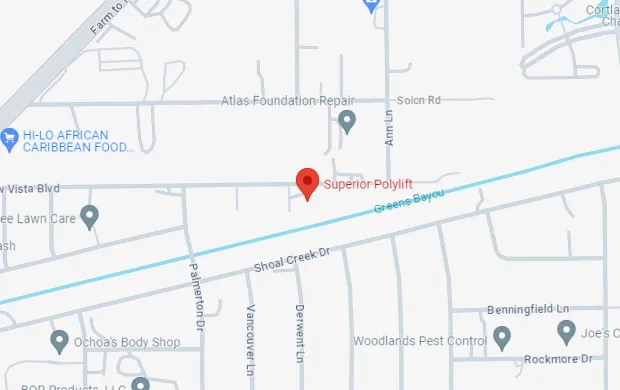
For retail facilities in the Houston metro evaluating concrete repair options, Superior PolyLift will assess the affected zones, propose a work window and zone-protection plan, and quote the repair scope with the same documentation rigor that municipal and federal infrastructure projects require. Schedule a site assessment.
Explore how our expertise can benefit your project. Reach out to our team for a consultation and discover the best solutions for your needs.

At Superior PolyLift™, integrity and reliability are the core of our ethos. Our expert team crafts custom solutions that guarantee quality and durability for every project. Choose us for geotechnical excellence that endures.
Copyright © All rights reserved. 2024 • Terms of Use and Privacy Policy • Internet Marketing by Authority Solutions®